
 View in the ChatGPT registry
- Brand
- Podwise
- Category
- Consumer & Lifestyle
- Primary Subcategory
- Podcast Discovery
Integration details
Description
Podcast workflows for Podwise accounts, using the Podwise MCP server: search podcasts and episodes, follow shows and see their new releases, read AI summaries, chapters, highlights, Q&A, mind maps and transcripts of episodes, and ask questions answered from podcast transcripts. Includes guided workflows to catch up on a backlog, write a weekly recap, take episode notes, research a topic across podcasts, debate the ideas in an episode, and build language-learning cards. Use when the user asks about podcasts, podcast episodes, or their Podwise library.
- Integration type
- Plugin
- Verification status
- Not applicable
- Platform
- ChatGPT
- Secondary Subcategories
- None listed
- Brand
- Podwise
- Access
- Account required
- First tracked
- 2026-10-20
- Tool count
- 38
- Geography
- US
Other Subcategories where the Integration is listed.
 Agent DiscoverabilityChatGPT Plugin Discovery Score
Your score is coming
ChatGPT now suggests Plugins on its own when they match a user's request.Your Plugin Discovery Score measures how often yours appears, and it will show here as soon as it’s ready.
What discovery looks like
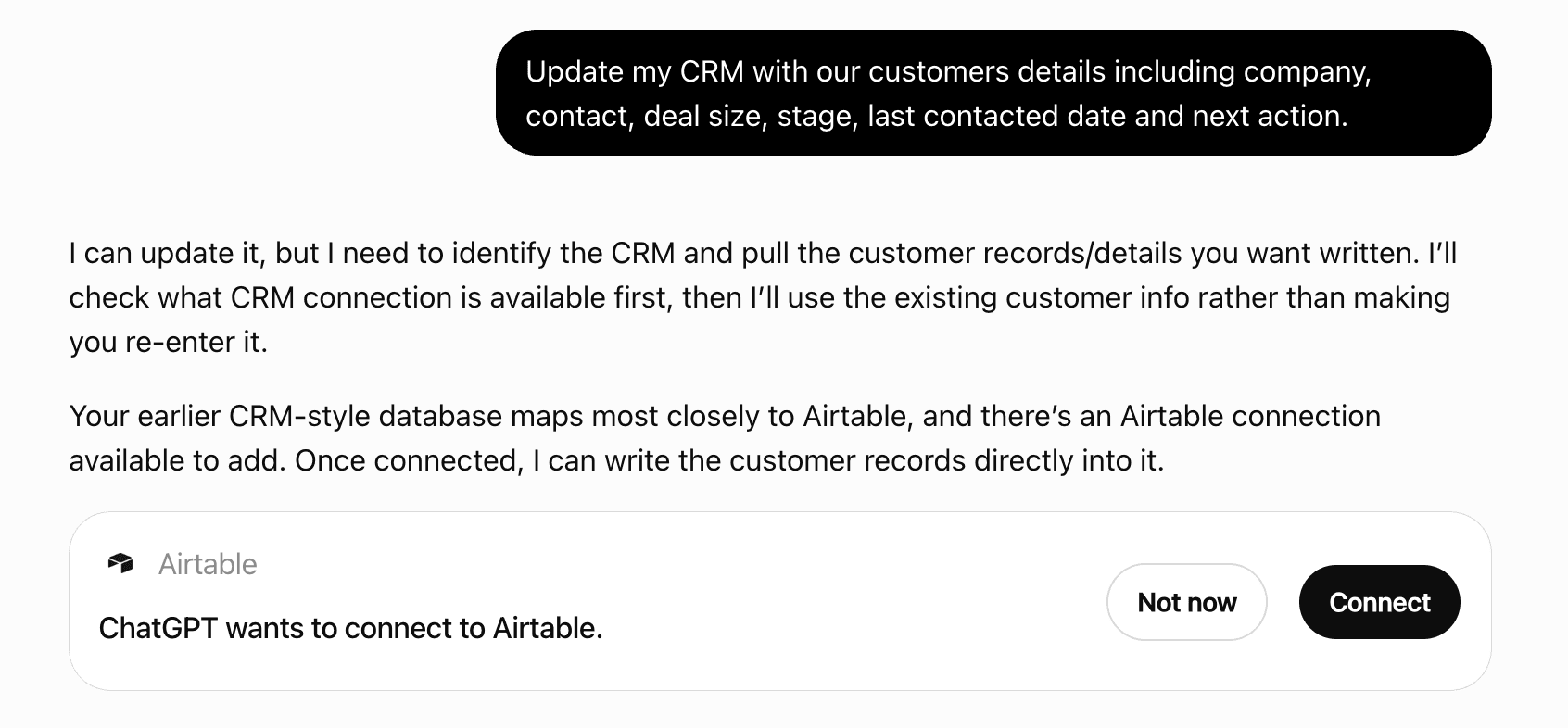
Get alerts for Podwise
Get updates when Podwise’s Discoverability Score or category rank changes.
Competing in ChatGPT Podcast Discovery
View Category38 tools agents can invoke

Podwise ChatGPT Plugin FAQ
How the directory, categories and Discoverability Score work.
Read the methodologyHow do I improve Podwise's ChatGPT Plugin discoverability?
The levers are the listing surface agents actually read: names, descriptions, keywords, tool metadata, and registry health. Which lever matters depends on where discovery breaks, which is what continuous measurement shows.
What are Podwise alternatives on ChatGPT?
As of 2026-10-20, Podwise competes with Analytics Power Hour Librarian, Audioscrape, Egleze, Podcast App, Potion, Rovyn, VO in ChatGPT Podcast Discovery, ranked by public Discoverability Score.
Where is this profile measured?
This profile uses the geography attached to the latest public registry snapshot: US. Locale tags are intentionally omitted.