
Bible Atlas
Explore the Bible visually with maps, timelines, family trees, and much more
 View in the Claude registry
- Brand
- Bible Atlas
- Category
- Education
- Primary Subcategory
- Scripture & Faith Study
Integration details
Description
Connect Claude to Bible Atlas, a structured, cross-referenced map of Scripture: people, places, events, family trees, and original-language words, all linked to the verses they come from. What you can do - Look up verses. Fetch a verse or a range with its surrounding context. - Search by name or by meaning. Find an entity directly, or describe an idea in plain words and get semantically related results. - Explore people and places. Pull up an entity's profile, its family tree, and its connections to other people, places, and events. Search places on the atlas. - Check the original languages. Look up Hebrew and Greek lexicon entries. - Browse the datasets. List the collections behind the atlas, or call any other public API endpoint directly. Good for - Bible study and sermon prep - Tracing genealogies and relationships - Answering "where and who was this?" questions with sources - Grounding Claude's answers in actual verses instead of memory Details - Read-only. It can't change anything and only reads from Bible Atlas. - No account needed. It uses the public API.
- Integration type
- Connector
- Verification status
 Community connector
- Platform
- Claude
- Primary Subcategory
- Scripture & Faith Study
- Secondary Subcategories
- None listed
- Brand
- Bible Atlas
- Access
- No account required
- First tracked
- 2026-10-15
- Tool count
- 12
- Geography
- US
The Primary Subcategory used for this profile’s headline score.
Other Subcategories where the Integration is listed.
 Agent DiscoverabilityClaude Discoverability Score
Claude Connector discovery is coming soon
Community Connectors only appear in Claude’s registry.Once verified, organic discovery begins and we can calculate your score.Read more about Community Connector verification.
No spam. Unsubscribe any time.
No spam. Unsubscribe any time.
What discovery looks like
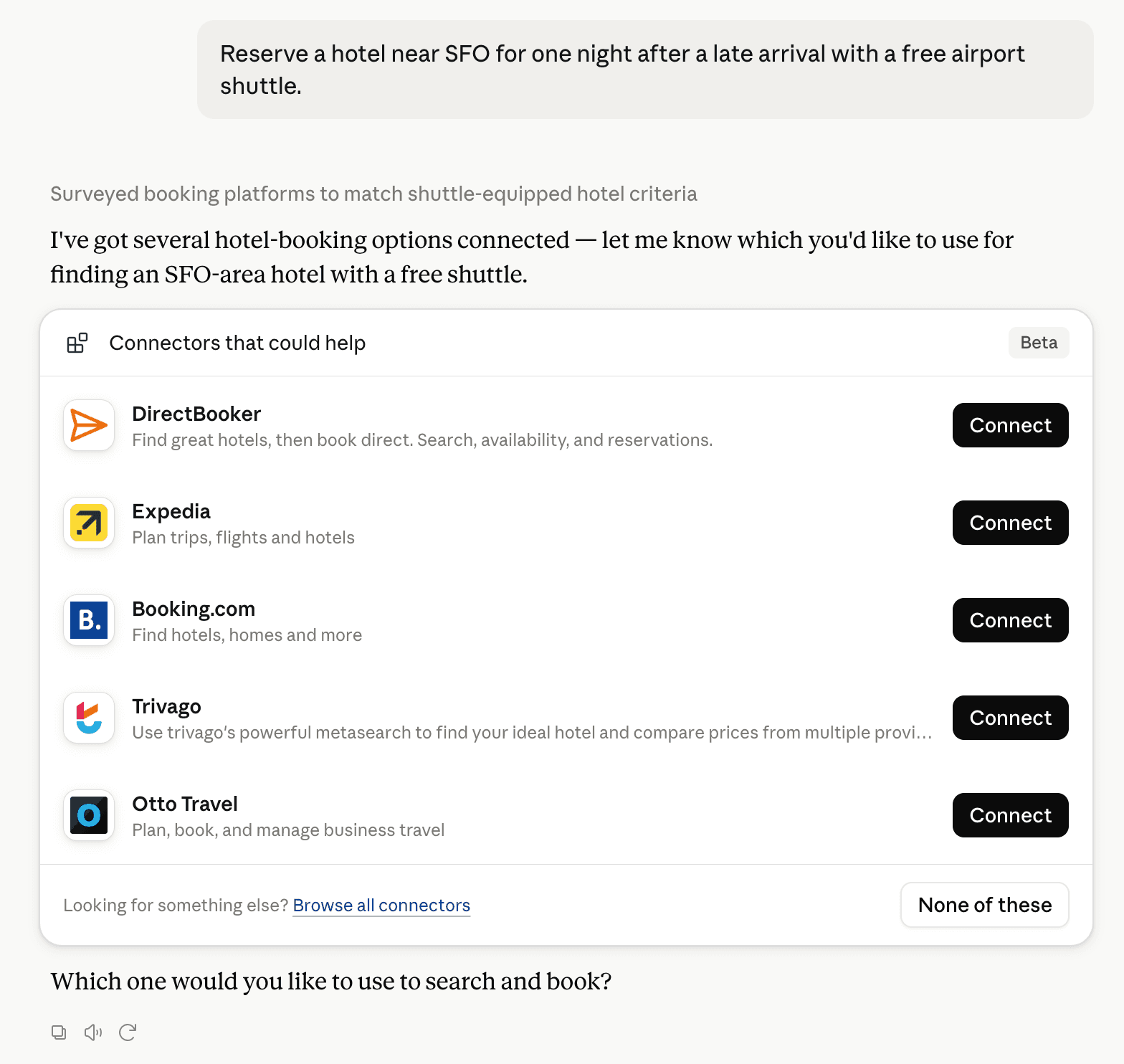
Claude can surface verified Connectors when they match a user’s Prompt.
How Claude Connector discovery works
Your Connector will compete to appear for users’ Prompts once Claude verifies it
Competing in Claude Scripture & Faith Study
View Category12 tools agents can invoke

Bible Atlas Claude Connector FAQ
How the directory, categories and Discoverability Score work.
Read the methodologyHow do I improve Bible Atlas's Claude Connector discoverability?
The levers are the listing surface agents actually read: names, descriptions, keywords, tool metadata, and registry health. Which lever matters depends on where discovery breaks, which is what continuous measurement shows.
What are Bible Atlas alternatives on Claude?
As of 2026-10-16, Bible Atlas competes with AC - Artificial Conscience®, Church Year by Cross + Covenant, FaithGPT: Christian Bible Study & Prayer, Let's Church, quran.ai, selah.so, Study Bible, Talmud Scroller and 4 more in Claude Scripture & Faith Study, ranked by public Discoverability Score.
Where is this profile measured?
This profile uses the geography attached to the latest public registry snapshot: US. Locale tags are intentionally omitted.