Lightrun
Connect AI assistants to live production runtime data—snapshots, call stacks, metrics, and execution counts—through Lightrun, with no redeploy required.
- Category
- Developer Tools
- Primary Subcategory
- Observability, Monitoring & Incident Response
 View in the Claude registry
Integration details
Description
Lightrun MCP connects your AI assistant to real runtime data from applications already running in production, staging, or development. Built on the Model Context Protocol, it lets Claude investigate live code behavior on your behalf—without changing code, rebuilding, or redeploying. **What you can do** - Discover connected agents, agent pools, and tags in your environment - Capture expression values and call stacks at specific code locations (snapshots) - Count how often a line executes - Measure execution duration between two lines (TicToc) - Sample custom numeric metrics from live code - Drill into raw measurement samples for deeper analysis **Why use it** Lightrun brings production-safe, on-demand observability into natural-language workflows. Instead of configuring probes manually, describe what you need and let the AI discover targets, place temporary instrumentation, and analyze results. Runtime data is subject to your organization’s PII redaction and permission rules. **How it works** Your AI assistant acts as an MCP client and connects to your Lightrun server at `/mcp`. The Lightrun MCP server translates requests into safe runtime inspections executed by Lightrun agents attached to your applications. **Authentication** - OAuth for interactive use (sign in with your Lightrun user) - API key (Bearer token with Dev scope) for agents and automation **Works great with Lightrun AI Skills** Pair this connector with reusable investigation workflows from the Lightrun AI repository—preflight checks, evidence collection, diagnosis, and handoff output for live runtime debugging. **Requirements** - A Lightrun account and server (SaaS: https://app.lightrun.com) - MCP access enabled for your organization - Lightrun agents connected to the applications you want to inspect
- Integration type
- Connector
- Verification status
 Community connector
- Platform
- Claude
- Primary Subcategory
- Observability, Monitoring & Incident Response
- Secondary Subcategories
- None listed
- Brand
- Lightrun
- Access
- Account required
- First tracked
- 2026-06-21
- Tool count
- 14
- Geography
- US
The Primary Subcategory used for this profile’s headline score.
Other Subcategories where the Integration is listed.
Claude Discoverability Score
Claude Connector discovery is coming soon
Community Connectors only appear in Claude’s registry.Once verified, organic discovery begins and we can calculate your score.Read more about Community Connector verification.
No spam. Unsubscribe any time.
No spam. Unsubscribe any time.
What discovery looks like
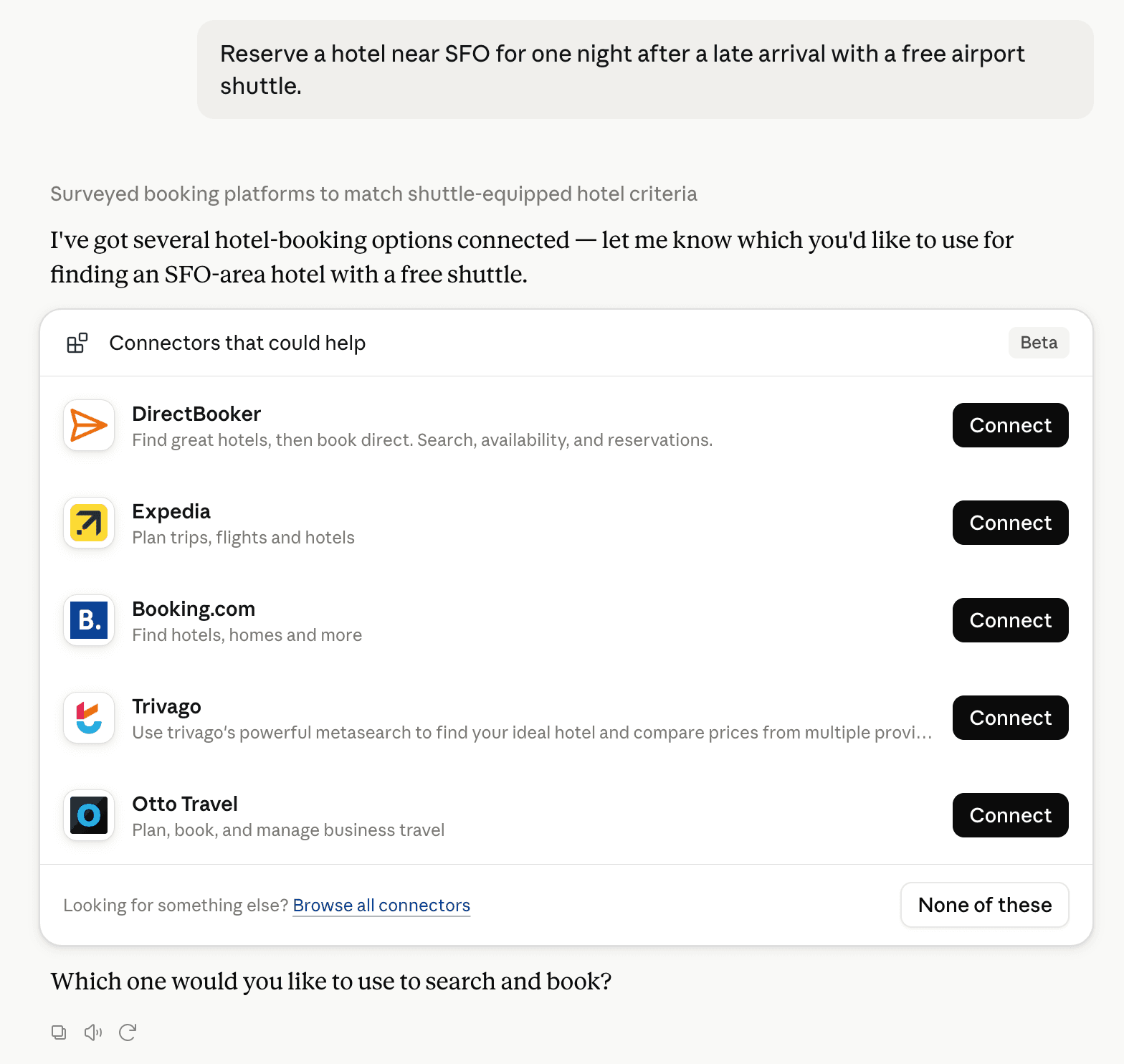
Claude can surface verified Connectors when they match a user’s Prompt.
How Claude Connector discovery works
Your Connector will compete to appear for users’ Prompts once Claude verifies it
Competing in Claude Observability, Monitoring & Incident Response
View Category14 tools agents can invoke
How do I improve a Community connector's discoverability?
The levers are the listing surface agents actually read: names, descriptions, keywords, tool metadata, and registry health. Which lever matters depends on where discovery breaks, which is what continuous measurement shows.
What are Lightrun alternatives on Claude?
As of 2026-09-28, Lightrun competes with Datadog, incident.io, Coralogix, PagerDuty, Bronto, Vercel, Sentry, Honeycomb, Railway, Steadybit, Elastic Cloud Serverless, Origin, Subtext, Adzviser Google PageSpeed Insights, AlertKick, Axiom, Beaam, InBrief, is it DNS?, LogRocket, MonoDuty, ohdear.app, openstatus, Orb, Raygun, Resolve AI, Sentinel, Stealthium, Tsuga, Uptimely, UptimeRobot, Watchgoose in Claude Observability, Monitoring & Incident Response, ranked by public Discoverability Score.
Where is this profile measured?
This profile uses the geography attached to the latest public registry snapshot: US. Locale tags are intentionally omitted.