SystemAudit
Scan any public GitHub repository for security risks, structure and exposed credentials — a health score and plain-English findings in seconds, no sign-in.
- Category
- Developer Tools
- Primary Subcategory
- Application Security & Vulnerability Management
 View in the Claude registry
Integration details
Description
SystemAudit reads a public GitHub repository the way a reviewer would and reports what a static read of the code shows: a health score out of 100, the highest-ranked risks described in plain English, how the codebase is put together, and how many potential hardcoded credentials it found. Three tools: - scan_repository: a static health check returning a score out of 100, ranked risks, and how many files were read out of how many the repository contains. - get_architecture: package ecosystem, detected architecture pattern, language mix, dependency count, and structural signals such as circular imports and files nothing else imports. - secrets_summary: counts of potential hardcoded credentials and committed environment files, by severity. Built for the moment before you commit to a codebase: evaluating an open-source dependency, running technical due diligence on an acquisition or investment, inheriting a repository, or sanity-checking code an AI tool generated. Honest by design. Every answer states how many files were read out of how many exist, so a clean result can never be mistaken for a clean repository. Locations and values of credentials are never returned, only counts by severity, so a scan cannot be used to harvest secrets from someone else's repository; the repository owner sees the detail in the full report at systemaudit.dev. No code is executed and no file contents are returned. Only public repositories are read. The connector needs no sign-in and no account, and receives only the repository you name, so no other part of your conversation reaches us. Repository files are processed and discarded, never stored. Typical response times: under a second for a cached result, around two seconds for a first scan of a small repository, and under five seconds for a repository of several thousand files.
- Integration type
- Connector
- Verification status
 Community connector
- Platform
- Claude
- Primary Subcategory
- Application Security & Vulnerability Management
- Secondary Subcategories
- None listed
- Brand
- SystemAudit
- Access
- No account required
- First tracked
- 2026-09-27
- Tool count
- 3
- Geography
- US
The Primary Subcategory used for this profile’s headline score.
Other Subcategories where the Integration is listed.
Claude Discoverability Score
Claude Connector discovery is coming soon
Community Connectors only appear in Claude’s registry.Once verified, organic discovery begins and we can calculate your score.Read more about Community Connector verification.
No spam. Unsubscribe any time.
No spam. Unsubscribe any time.
What discovery looks like
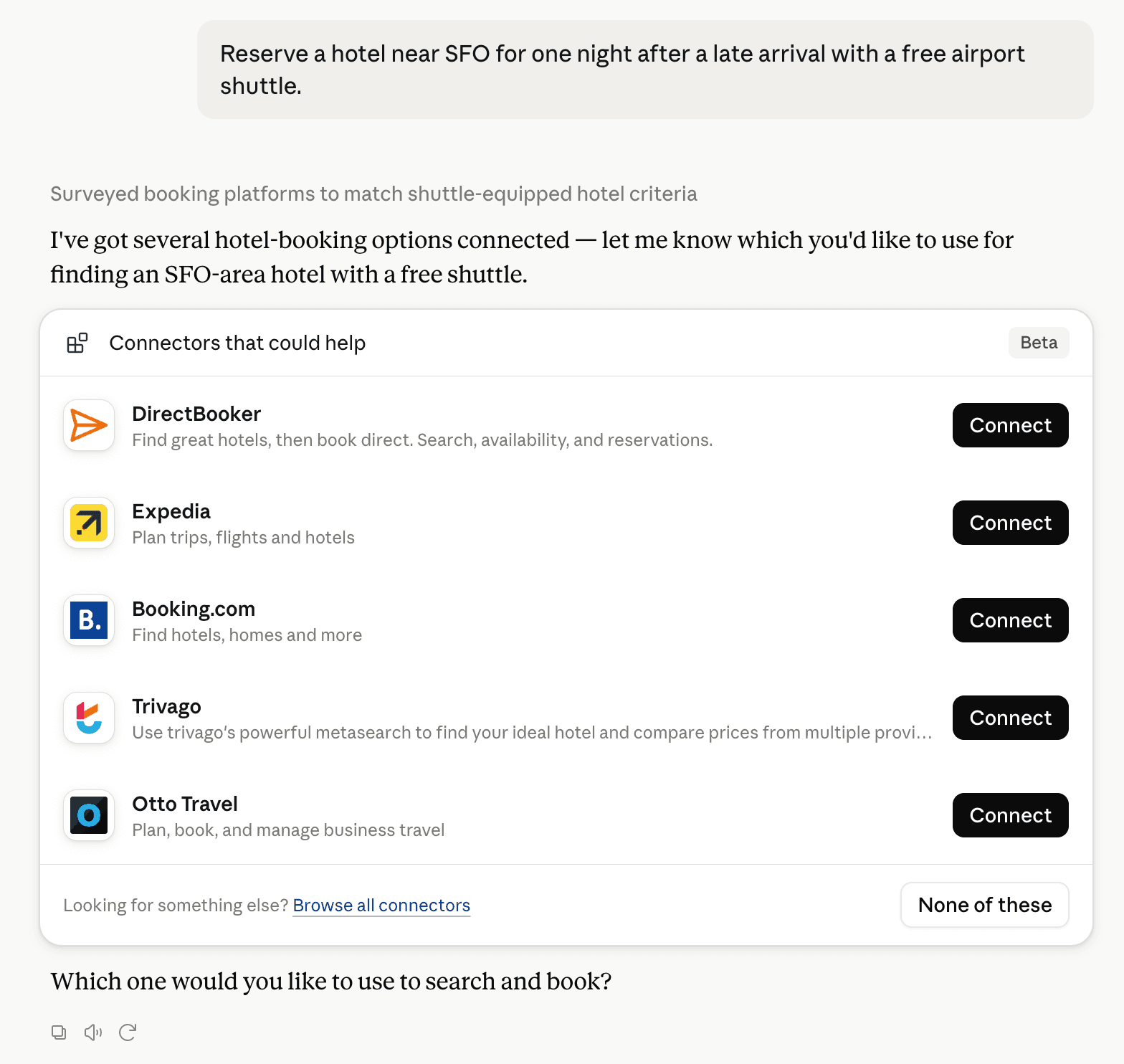
Claude can surface verified Connectors when they match a user’s Prompt.
How Claude Connector discovery works
Your Connector will compete to appear for users’ Prompts once Claude verifies it
Competing in Claude Application Security & Vulnerability Management
View Category3 tools agents can invoke
How do I improve a Community connector's discoverability?
The levers are the listing surface agents actually read: names, descriptions, keywords, tool metadata, and registry health. Which lever matters depends on where discovery breaks, which is what continuous measurement shows.
What are SystemAudit alternatives on Claude?
As of 2026-09-27, SystemAudit competes with Pi Security, Datadog, JupiterOne, Affirmed AI, AgentAvow, Apiiro Guardian, Arcjet, Assurly, atlasFindings, FlawPilot, mcp.xfa.tech, MindFort MCP, Orca Security, PathToShip, Pillar, Safeguard, SubImage in Claude Application Security & Vulnerability Management, ranked by public Discoverability Score.
Where is this profile measured?
This profile uses the geography attached to the latest public registry snapshot: US. Locale tags are intentionally omitted.