
DechoNet
Check domains, links and pages from the outside before you or your agent act — security score, phishing signals, DNS, TLS, email authentication, what changed, and signed records of what was seen.
 View in the Claude registry
- Brand
- DechoNet
- Category
- Security
- Primary Subcategory
- Application Security & Vulnerability Management
Integration details
Description
DechoNet checks domains, links and IP addresses from the outside, using only public information, for site owners, developers, security staff, people building AI agents and anyone who got a suspicious link. Seen. Remembered. Signed. What you can ask Claude to do with it: Give a domain an overall security score (0–100, grade A+ to F) with the fixes that matter most, across DNS, the TLS certificate, HTTP security headers, email authentication, registration data and network — passive, public lookups only. Check a page before logging in, paying, submitting a form or downloading: phishing signals, where card fields are hosted, and hidden text addressed to AI agents. Every answer lists what was not checked. Check whether a link from a text message or email shows phishing signals. Redirects and shorteners are followed to the real destination. Write down what should stay true about your domain (HTTPS works, a header is present, DMARC policy, certificate days left) and have DechoNet confirm it from the outside, now and daily, with where to fix what does not hold. Run a single check for any one area: DNS, certificate and TLS, email authentication, response headers, registration, network, subdomains, look-alike domains. See what changed on a domain, and report a page or MCP server that looks malicious so DechoNet checks it itself. How it works: checks run from Cloudflare's global edge plus a vantage point in Seoul. Domain, host and IP results come with a signed observation record that anyone can verify against DechoNet's public key. Limits: DechoNet reads public data only. Ports are checked only on request. It does not log in or test apps from the inside. A result without warning signs is not a guarantee; it is a snapshot at the time shown. A report alone never changes a verdict. Tools that save something (monitoring, expectations, reports) are marked as such in their annotations; all others only read.
- Integration type
- Connector
- Verification status
 Community connector
- Platform
- Claude
- Primary Subcategory
- Application Security & Vulnerability Management
- Secondary Subcategories
- None listed
- Brand
- DechoNet
- Access
- No account required
- First tracked
- 2026-10-15
- Tool count
- 28
- Geography
- US
The Primary Subcategory used for this profile’s headline score.
Other Subcategories where the Integration is listed.
 Agent DiscoverabilityClaude Discoverability Score
Claude Connector discovery is coming soon
Community Connectors only appear in Claude’s registry.Once verified, organic discovery begins and we can calculate your score.Read more about Community Connector verification.
No spam. Unsubscribe any time.
No spam. Unsubscribe any time.
What discovery looks like
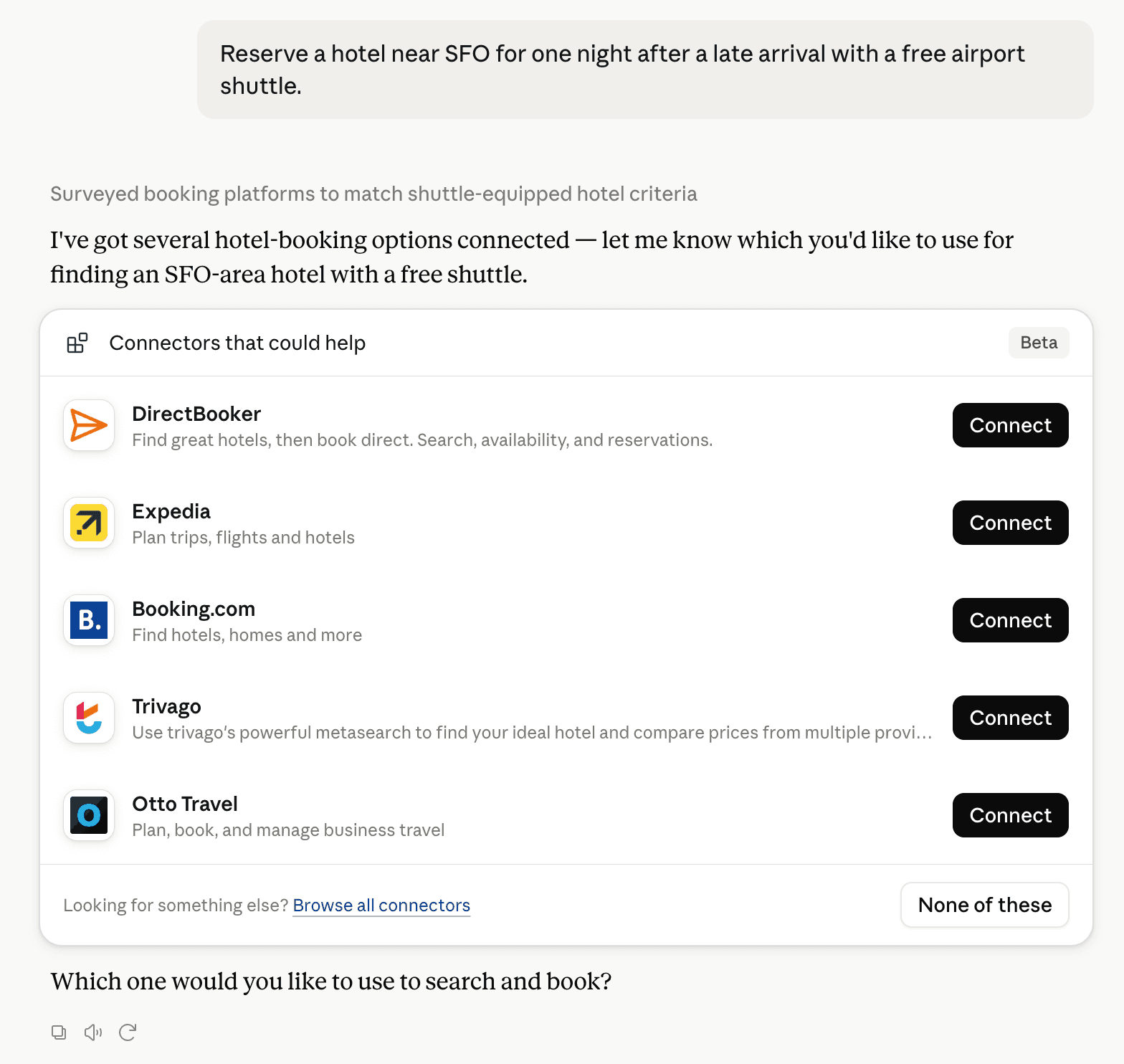
Claude can surface verified Connectors when they match a user’s Prompt.
How Claude Connector discovery works
Your Connector will compete to appear for users’ Prompts once Claude verifies it
Competing in Claude Application Security & Vulnerability Management
View Category28 tools agents can invoke

DechoNet Claude Connector FAQ
How the directory, categories and Discoverability Score work.
Read the methodologyHow do I improve DechoNet's Claude Connector discoverability?
The levers are the listing surface agents actually read: names, descriptions, keywords, tool metadata, and registry health. Which lever matters depends on where discovery breaks, which is what continuous measurement shows.
What are DechoNet alternatives on Claude?
As of 2026-10-16, DechoNet competes with CloudBees Unify MCP Server, ActiveLayer, Affirmed AI, AgentAvow, Apiiro Guardian, Arcjet, Assurly, atlasFindings and 20 more in Claude Application Security & Vulnerability Management, ranked by public Discoverability Score.
Where is this profile measured?
This profile uses the geography attached to the latest public registry snapshot: US. Locale tags are intentionally omitted.