
xSpeed Scan: Free Website Speed Test
Free website speed test in Claude: PageSpeed (Lighthouse) scores, Core Web Vitals, TTFB and caching checks for any URL, graded 0-100 with the exact fix for every issue. No signup.
 View in the Claude registry
- Brand
- xSpeed Cache
- Category
- Developer Tools
- Primary Subcategory
- Observability, Monitoring & Incident Response
Integration details
Description
xSpeed Scan is a free website speed test you can run from Claude. Give it any public URL and it runs Google PageSpeed Insights (Lighthouse) on desktop and mobile alongside its own server probes, then grades the site 0-100 and names the exact fix for every failing check. Think PageSpeed Insights and GTmetrix, answered in plain language inside your chat, with a shareable report link. No account, no API key and nothing to install. It works on any website: WordPress, WooCommerce, Shopify, Webflow, Next.js or hand-built. Ask Claude things like: - "Scan example.com and tell me the three fixes that would gain the most." - "Why is my mobile PageSpeed score so much lower than desktop?" - "Compare the Core Web Vitals of my site and a competitor's." - "Is my CDN actually caching my homepage?" What every scan checks: - Lab performance: Lighthouse performance score, LCP, CLS, TBT and FCP on desktop and mobile, graded on Google's thresholds - Real-user Core Web Vitals from the Chrome UX Report (LCP, INP, CLS), the numbers Google ranks on - Server response and caching: time to first byte (TTFB), cache HIT/MISS evidence, CDN edge caching, Brotli/GZIP compression and redirect chains - Asset optimization: render-blocking CSS and JavaScript, minification, modern image formats (WebP/AVIF), lazy loading and total page weight - Platform detection: WordPress, the caching plugin in use, and Cloudflare or other CDNs Every report gets a permanent shareable link with a desktop/mobile toggle, scan history and fixes ranked by points recovered, so you can send results to a client or developer. All five tools are read-only: run_speed_scan and get_speed_scan, plus get_product_overview, list_features and get_pricing for questions about xSpeed Cache. Fair-use limit: 4 scans per user per 10 minutes. Made by WPDeveloper, the team behind the xSpeed Cache WordPress plugin.
- Integration type
- Connector
- Verification status
 Community connector
- Platform
- Claude
- Primary Subcategory
- Observability, Monitoring & Incident Response
- Secondary Subcategories
- None listed
- Brand
- xSpeed Cache
- Access
- No account required
- First tracked
- 2026-10-08
- Tool count
- 5
- Geography
- US
The Primary Subcategory used for this profile’s headline score.
Other Subcategories where the Integration is listed.
 Agent DiscoverabilityClaude Discoverability Score
Claude Connector discovery is coming soon
Community Connectors only appear in Claude’s registry.Once verified, organic discovery begins and we can calculate your score.Read more about Community Connector verification.
No spam. Unsubscribe any time.
No spam. Unsubscribe any time.
What discovery looks like
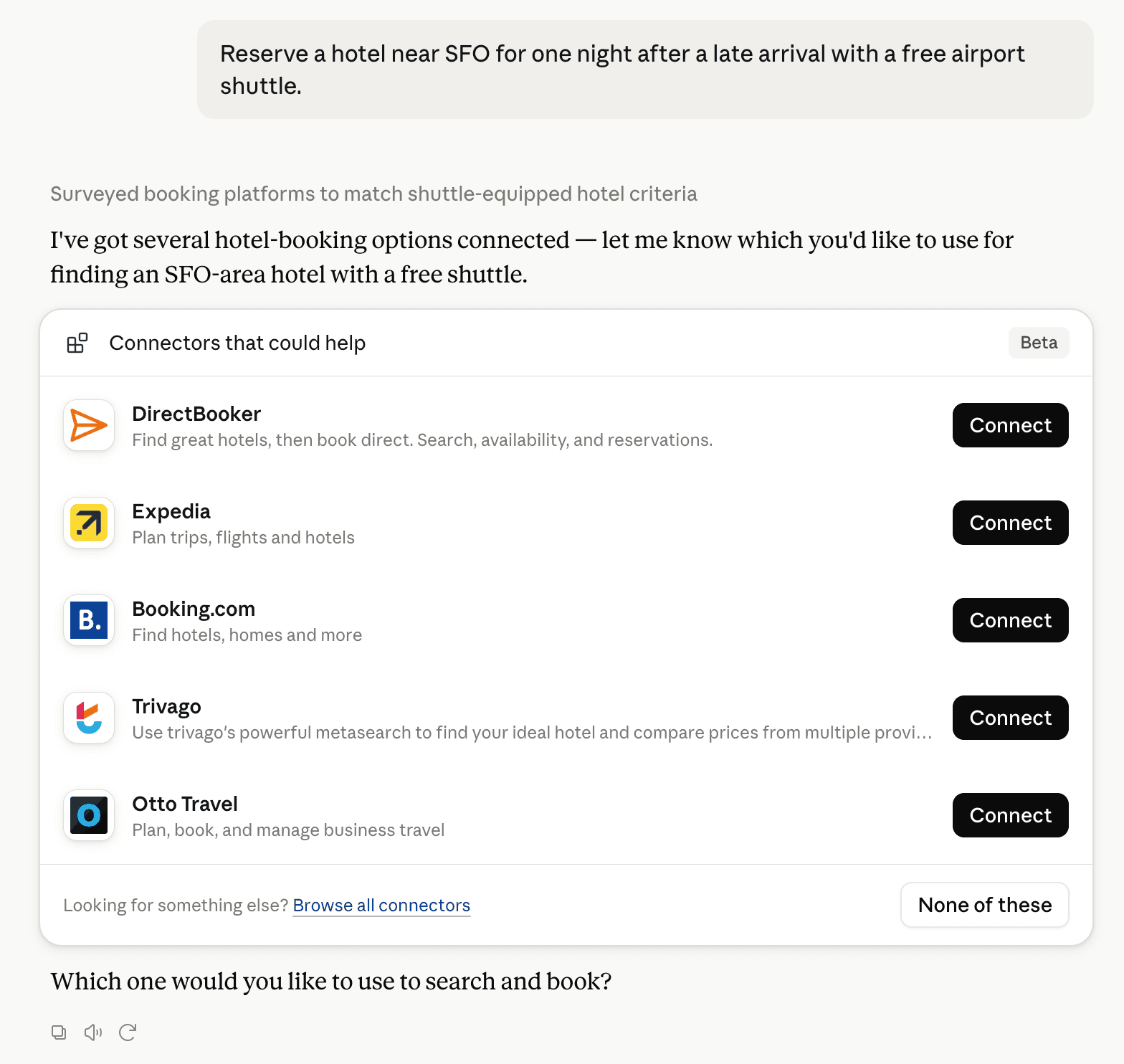
Claude can surface verified Connectors when they match a user’s Prompt.
How Claude Connector discovery works
Your Connector will compete to appear for users’ Prompts once Claude verifies it
Competing in Claude Observability, Monitoring & Incident Response
View Category
5 tools agents can invoke

xSpeed Scan: Free Website Speed Test Claude Connector FAQ
How the directory, categories and Discoverability Score work.
Read the methodologyHow do I improve xSpeed Scan: Free Website Speed Test's Claude Connector discoverability?
The levers are the listing surface agents actually read: names, descriptions, keywords, tool metadata, and registry health. Which lever matters depends on where discovery breaks, which is what continuous measurement shows.
What are xSpeed Scan: Free Website Speed Test alternatives on Claude?
As of 2026-10-09, xSpeed Scan: Free Website Speed Test competes with Datadog, incident.io, Coralogix, PagerDuty, Bronto, Sentry, Vercel, Honeycomb and 40 more in Claude Observability, Monitoring & Incident Response, ranked by public Discoverability Score.
Where is this profile measured?
This profile uses the geography attached to the latest public registry snapshot: US. Locale tags are intentionally omitted.