
k9 Security Reachable Risk
Prioritize Dependabot and scanner CVE alerts by risk from reachability, CISA KEV, and EPSS, with a clear recommendation and evidence for every alert, plus tested fix PRs from your coding agent.
 View in the Claude registry
- Brand
- k9 Security
- Category
- Security
- Primary Subcategory
- Application Security & Vulnerability Management
Integration details
Description
Most of your dependency alerts cannot reach your code, and the few that can are buried among them. k9 Security Reachable Risk scores every Dependabot, Trivy, or other scanner alert by risk, so engineers work the queue in the right order: fix today, schedule, or defer with the reason written down. Your agent analyzes reachability in your code. k9 scores each alert on three factors: Threat (VulnCheck KEV, CISA KEV, and FIRST EPSS exploitation evidence), Exposure (whether untrusted input reaches the vulnerable code), and Impact (how critical the asset is, from the risk context you declare). Each alert gets FIX_TODAY, REVIEW, SCHEDULE, or DEFER with the evidence behind it, so a deferral holds up when security or an auditor asks. CVSS severity is recorded, never used as a triage input. See a real report: https://www.k9security.io/lp/reachable-risk/samples/ What you can do in Claude: - Check whether a CVE is known exploited (VulnCheck KEV, a superset of CISA KEV) and how likely exploitation is (EPSS). - Resolve GHSA and other advisory IDs to CVEs and read the advisory details. - Score a dependency alert in the context where its code runs, and get a verdict with residual risk on the NIST SP 800-30 scale. - Learn how to describe your deployment in a `.k9security/risk-context.yaml` file so verdicts reflect your environment. Then fix them. In Claude Code or another coding agent with your repository open, k9's fix workflow has the agent upgrade each dependency worth fixing, run your tests, and open a pull request. Nothing merges without you. To triage weekly, use our GitHub Action or a Claude Code routine: https://docs.k9security.io/agents/ Pricing: 7-day free trial, no card required. Then $10/month for 1,000 alerts, $0.03 per alert above plan. One alert scored in every context where it executes is metered once. Lookups (KEV, EPSS, advisories) are not metered. Get started: https://www.k9security.io/lp/reachable-risk-9/
- Integration type
- Connector
- Verification status
 Community connector
- Platform
- Claude
- Primary Subcategory
- Application Security & Vulnerability Management
- Secondary Subcategories
- None listed
- Brand
- k9 Security
- Access
- Account required
- First tracked
- 2026-10-24
- Tool count
- 9
- Geography
- US
The Primary Subcategory used for this profile’s headline score.
Other Subcategories where the Integration is listed.
 Agent DiscoverabilityClaude Discoverability Score
Claude Connector discovery is coming soon
Community Connectors only appear in Claude’s registry.Once verified, organic discovery begins and we can calculate your score.Read more about Community Connector verification.
No spam. Unsubscribe any time.
What discovery looks like
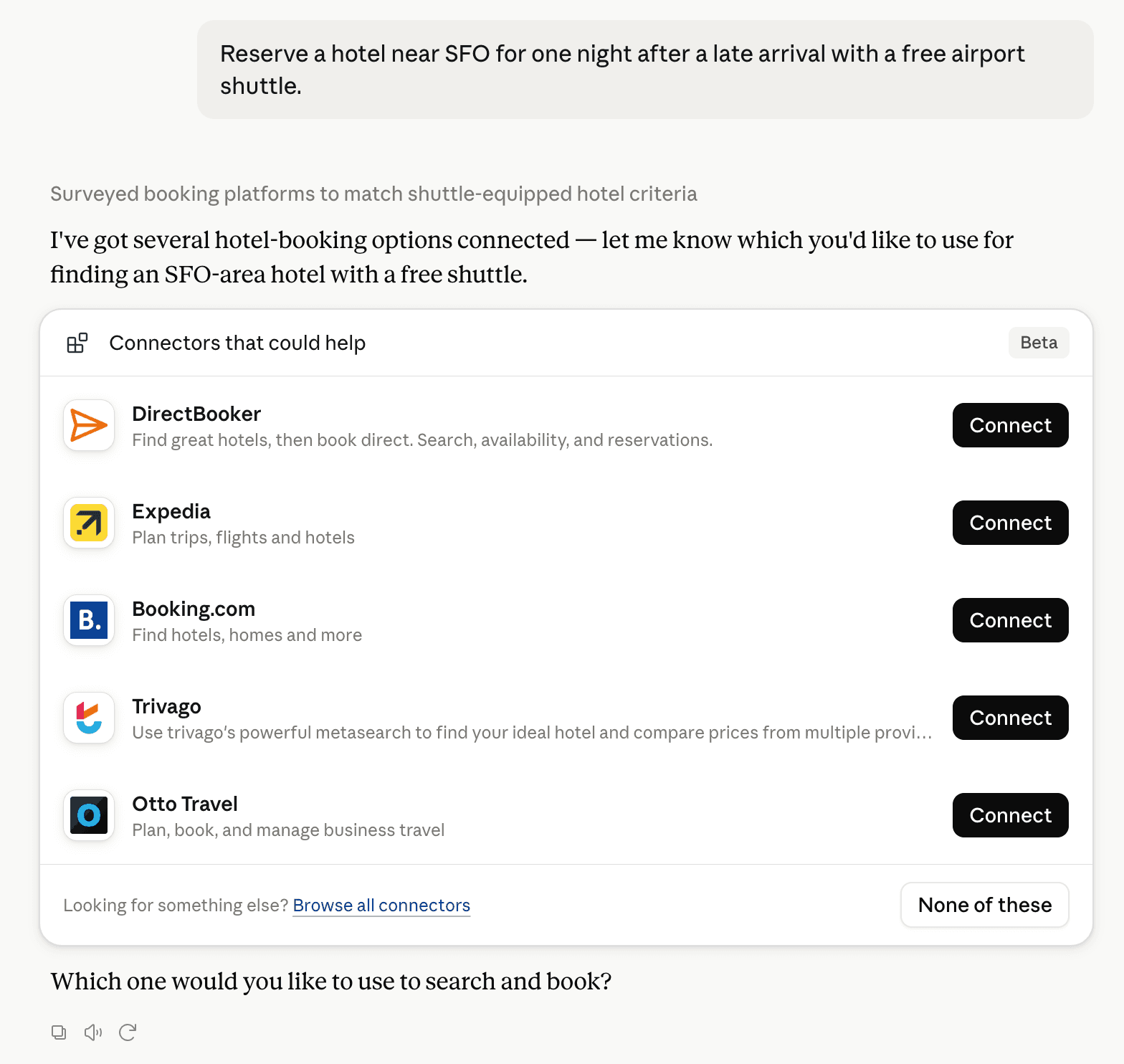
Claude can surface verified Connectors when they match a user’s Prompt.
How Claude Connector discovery works
Your Connector will compete to appear for users’ Prompts once Claude verifies it
Competing in Claude Application Security & Vulnerability Management
View Category9 tools agents can invoke

k9 Security Reachable Risk Claude Connector FAQ
How the directory, categories and Discoverability Score work.
Read the methodologyHow do I improve k9 Security Reachable Risk's Claude Connector discoverability?
The levers are the listing surface agents actually read: names, descriptions, keywords, tool metadata, and registry health. Which lever matters depends on where discovery breaks, which is what continuous measurement shows.
What are k9 Security Reachable Risk alternatives on Claude?
As of 2026-10-27, k9 Security Reachable Risk competes with CloudBees Unify MCP Server, ActiveLayer, Affirmed AI, AgentAvow, AgentMart Site Check, AI Website Security, Apiiro Guardian, Arcjet and 30 more in Claude Application Security & Vulnerability Management, ranked by public Discoverability Score.
Where is this profile measured?
This profile uses the geography attached to the latest public registry snapshot: US. Locale tags are intentionally omitted.