Bizora Tax Research
Primary source tax research inside Claude. Every answer cites the Code, regulations, rulings, and case law.
- Category
- Finance
- Primary Subcategory
- Legal Research Engines
 View in the Claude registry
Integration details
Description
Bizora is an AI native tax research platform. This connector brings Bizora's research engine into Claude, so you can ask a tax question in the middle of your actual work and get an answer grounded in primary source authority rather than secondary commentary. Ask the question the way you would ask a colleague. Bizora interprets it, researches it against the governing authority, and returns a reasoned answer with citations you can open and verify yourself. Responses point back to the sources that control the issue, including the Internal Revenue Code, Treasury regulations, revenue rulings and revenue procedures, IRS guidance, and federal case law. State and international authority is included where the question calls for it. Common uses: - Researching a client position before you commit to it on a return - Checking whether recent legislation or guidance changes an answer you already relied on - Working through cross border and multistate questions where the authority is scattered - Building the technical support behind a memo, a client email, or a workpaper Getting oriented on an issue outside your usual specialty Because the connector runs inside Claude, the research sits alongside the rest of your work. You can pull up a client email, research the question it raises, and draft the reply in one thread. Every tool in this connector is read only. Bizora retrieves and analyzes tax authority and does not create, modify, or delete anything in your account. Bizora is a research tool, not a substitute for professional judgment. Review the cited authority before relying on any answer in client work.
- Integration type
- Connector
- Verification status
 Community connector
- Platform
- Claude
- Primary Subcategory
- Legal Research Engines
- Secondary Subcategories
- None listed
- Brand
- Bizora
- Access
- Account required
- First tracked
- 2026-09-15
- Tool count
- 1
- Geography
- US
The Primary Subcategory used for this profile’s headline score.
Other Subcategories where the Integration is listed.
Claude Discoverability Score
Claude Connector discovery is coming soon
Community Connectors only appear in Claude’s registry.Once verified, organic discovery begins and we can calculate your score.Read more about Community Connector verification.
No spam. Unsubscribe any time.
No spam. Unsubscribe any time.
What discovery looks like
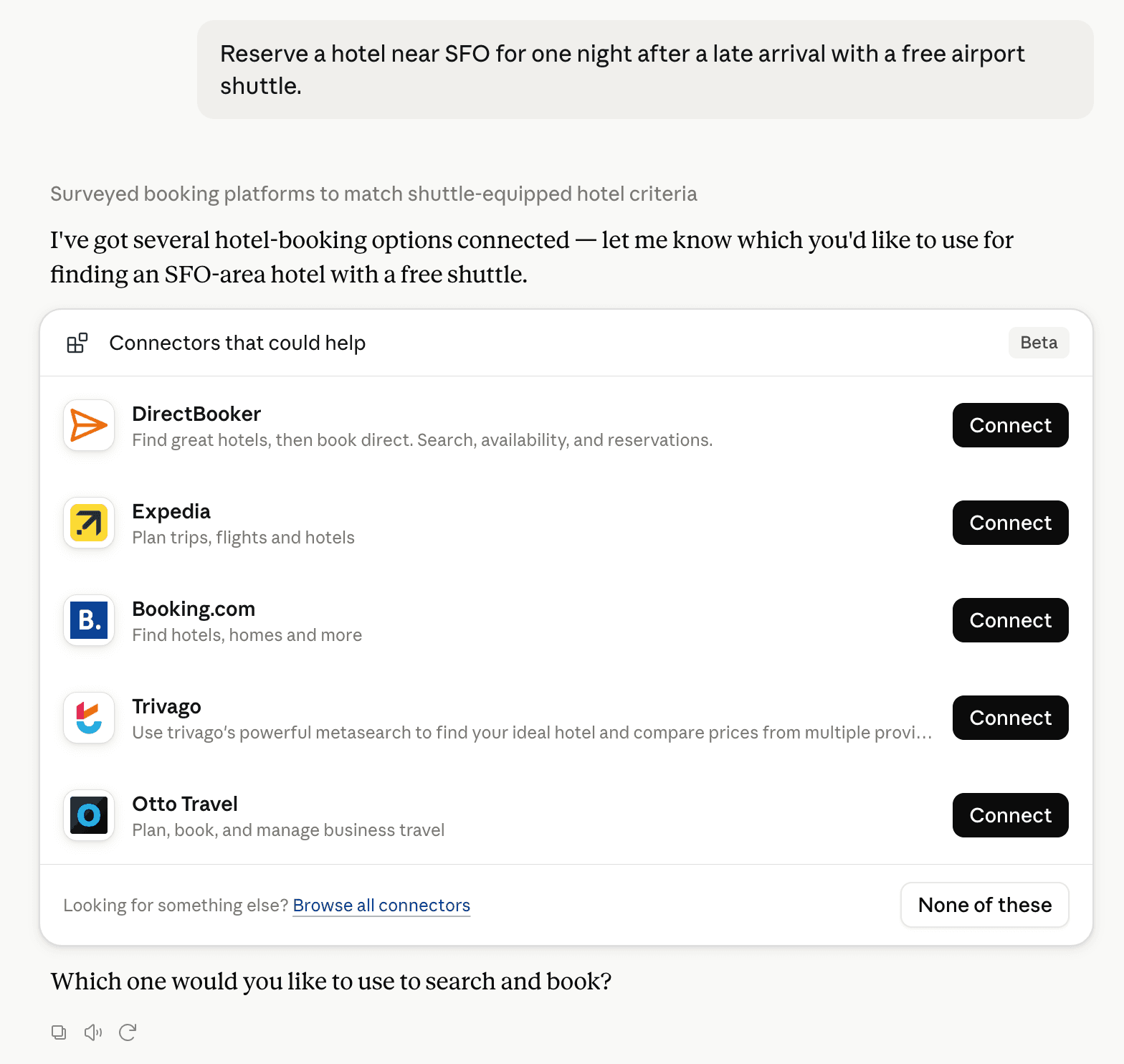
Claude can surface verified Connectors when they match a user’s Prompt.
How Claude Connector discovery works
Your Connector will compete to appear for users’ Prompts once Claude verifies it
Competing in Claude Legal Research Engines
View Category
1 tool agents can invoke
How do I improve a Community connector's discoverability?
The levers are the listing surface agents actually read: names, descriptions, keywords, tool metadata, and registry health. Which lever matters depends on where discovery breaks, which is what continuous measurement shows.
What are Bizora Tax Research alternatives on Claude?
As of 2026-09-16, Bizora Tax Research competes with CourtListener, Lawstronaut, Midpage Legal Research, Descrybe Legal Engine, CoCounsel Legal, Legal Data Hunter, Trellis, Bloomberg Law, Courtroom5, Jus AI by Jus Mundi (Light Mode), Legal Brain Agent, Vasara, Alizé, BIA Edge, Citare IA, CiteLaw, Courrt, Deley - Investigación legal de Ecuador, DingDuff, DirectCase Legal Search, DocketBird, ElevenFlo, eulaw.ai, FedMCP, Goalie Trademark Search, GovQuery, JUDY, Juridata, Jusratio, JusticeNow Library, Laki.ai, Lawgical.vn, Leagle - Turkish Law, LegalInk AI — Inka, LibreJustice, Nevo, Paxton Legal Research, Policy Doctor, Simpliciter, TaxGraph, TaxMCP, Trifolia, TrustFoundry Legal Search and Reasoning, USLege in Claude Legal Research Engines, ranked by public Discoverability Score.
Where is this profile measured?
This profile uses the geography attached to the latest public registry snapshot: US. Locale tags are intentionally omitted.